An airport outfit has a hard job: look put-together at check-in, survive twelve hours of sitting, pass through security without a fuss, handle freezing cabins and hot arrivals — and, for a praying woman, let you make salah somewhere between gates without a wardrobe crisis. Here is the formula.
The three rules of a good travel-day outfit
1. Layers over weight
One heavy garment fails you twice: too hot in the taxi, useless when the cabin is cold in a different way. Instead: a breathable base (wide-leg trousers or a maxi dress), a long cardigan or light abaya as the middle layer, and a large scarf or shawl that triples as hijab backup, blanket and prayer-space marker.
2. Security-friendly by design
Slip-on shoes, minimal metal, a hijab style that does not need re-pinning after the scanner. An underscarf plus a simply wrapped hijab survives a pat-down check far better than an elaborate pinned style.
3. Fabrics that forgive
Choose knits, crinkle fabrics and matte jerseys — they shrug off twelve hours of sitting. Linen looks beautiful at departure and defeated on arrival. (More fabric guidance in our Dubai modest style guide.)
Three outfit formulas that work
- The classic: wide-leg trousers + longline tunic + open abaya or duster + slip-on trainers. Polished, endlessly comfortable.
- The one-and-done: a loose maxi dress in heavy jersey + denim or utility jacket + white trainers. One decision, done.
- The layered minimalist: matching knit set (loose top + trousers) + oversized shawl. Feels like pyjamas, reads as intentional.
The prayer-ready secret
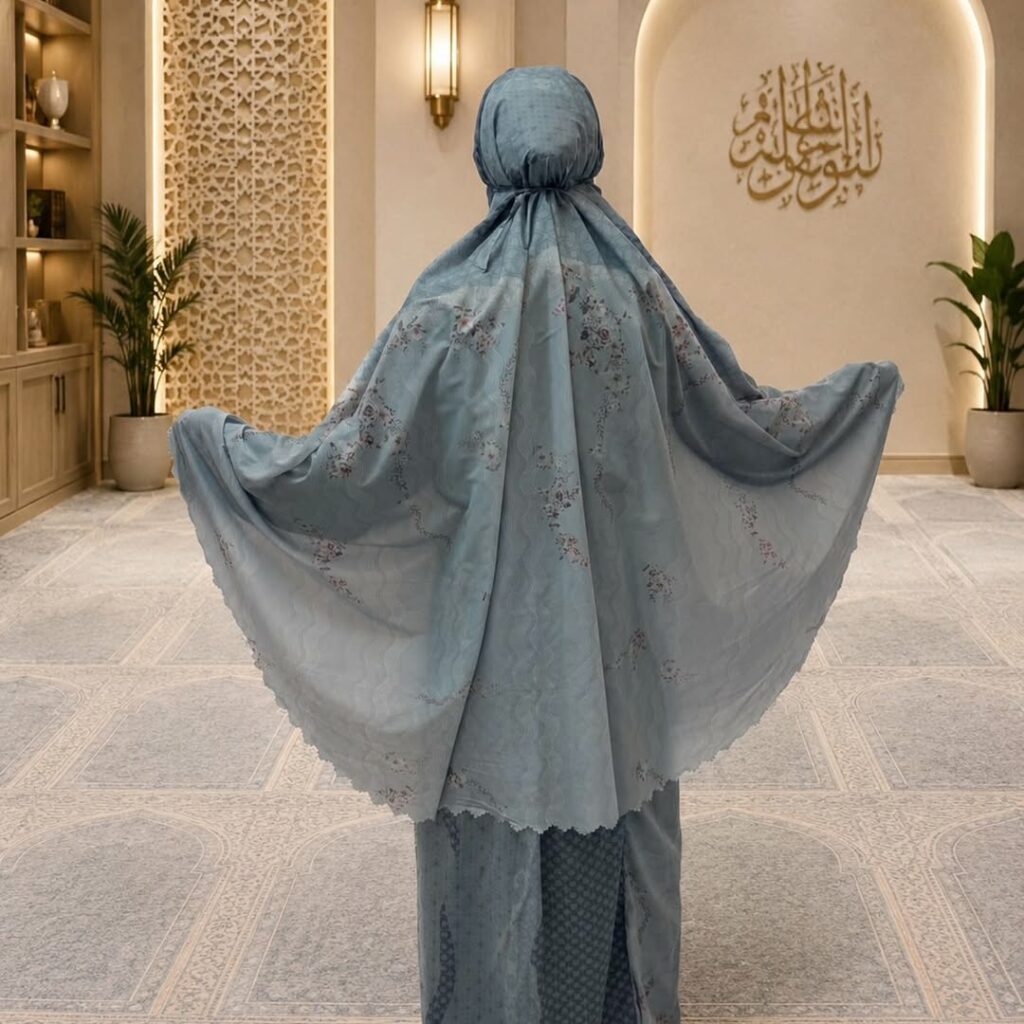
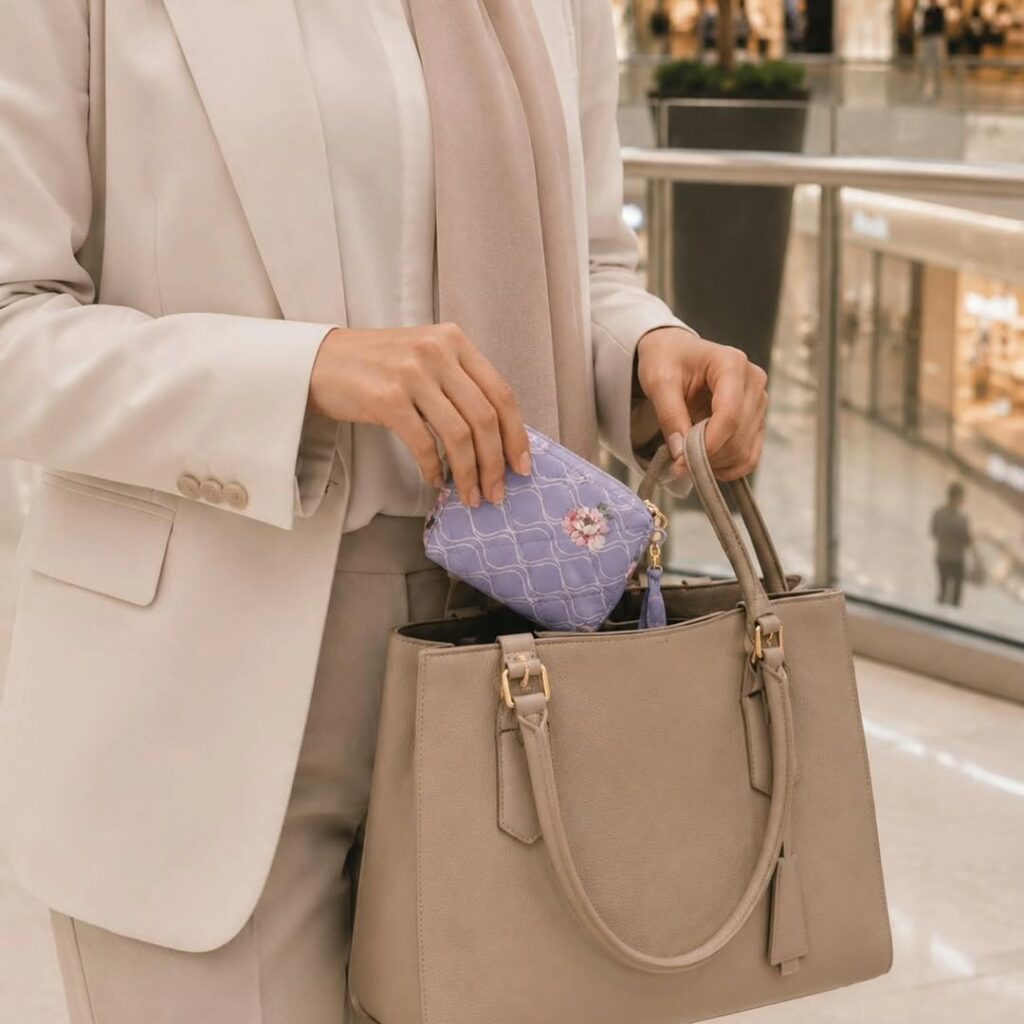
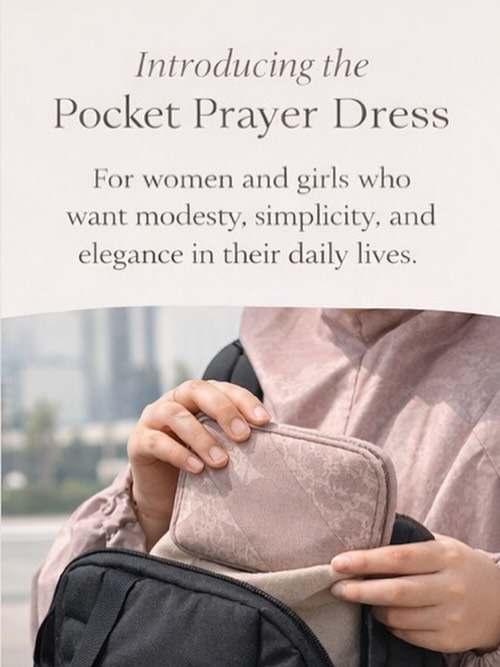
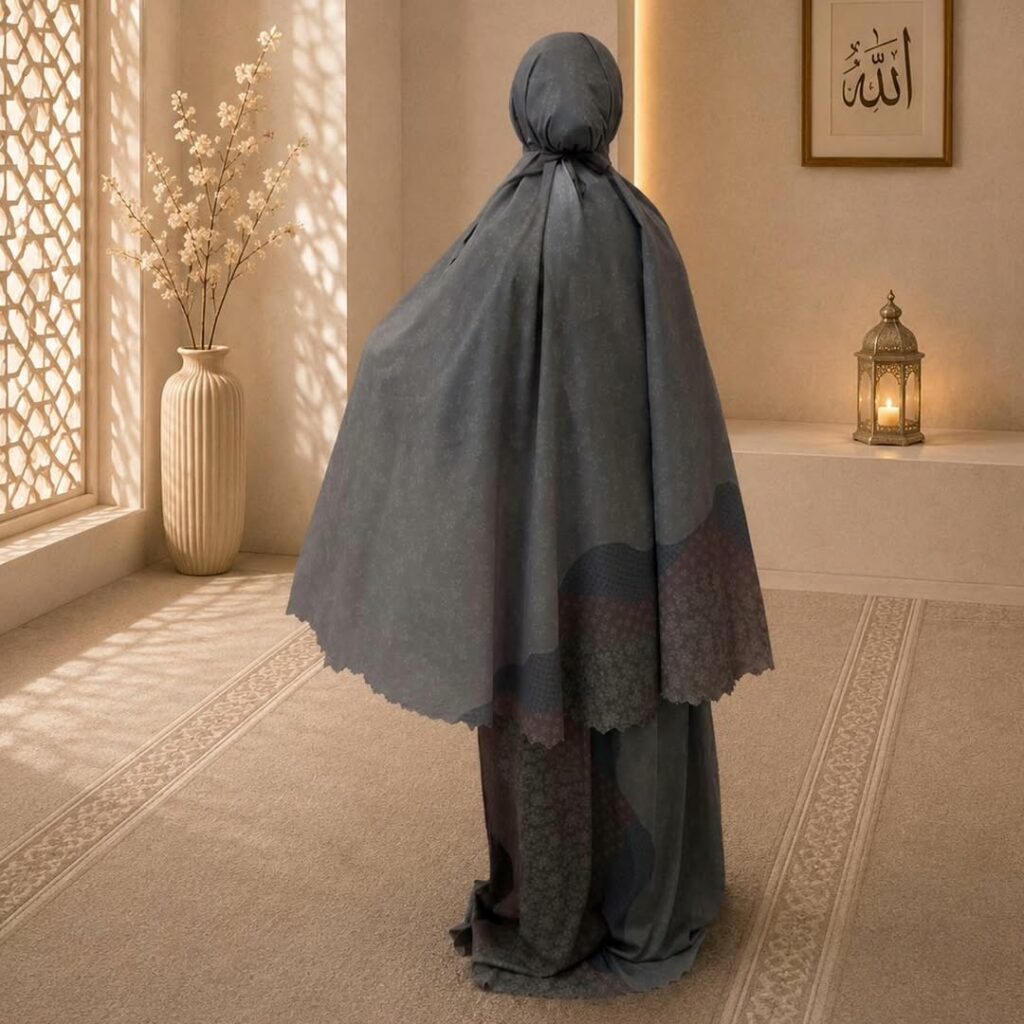
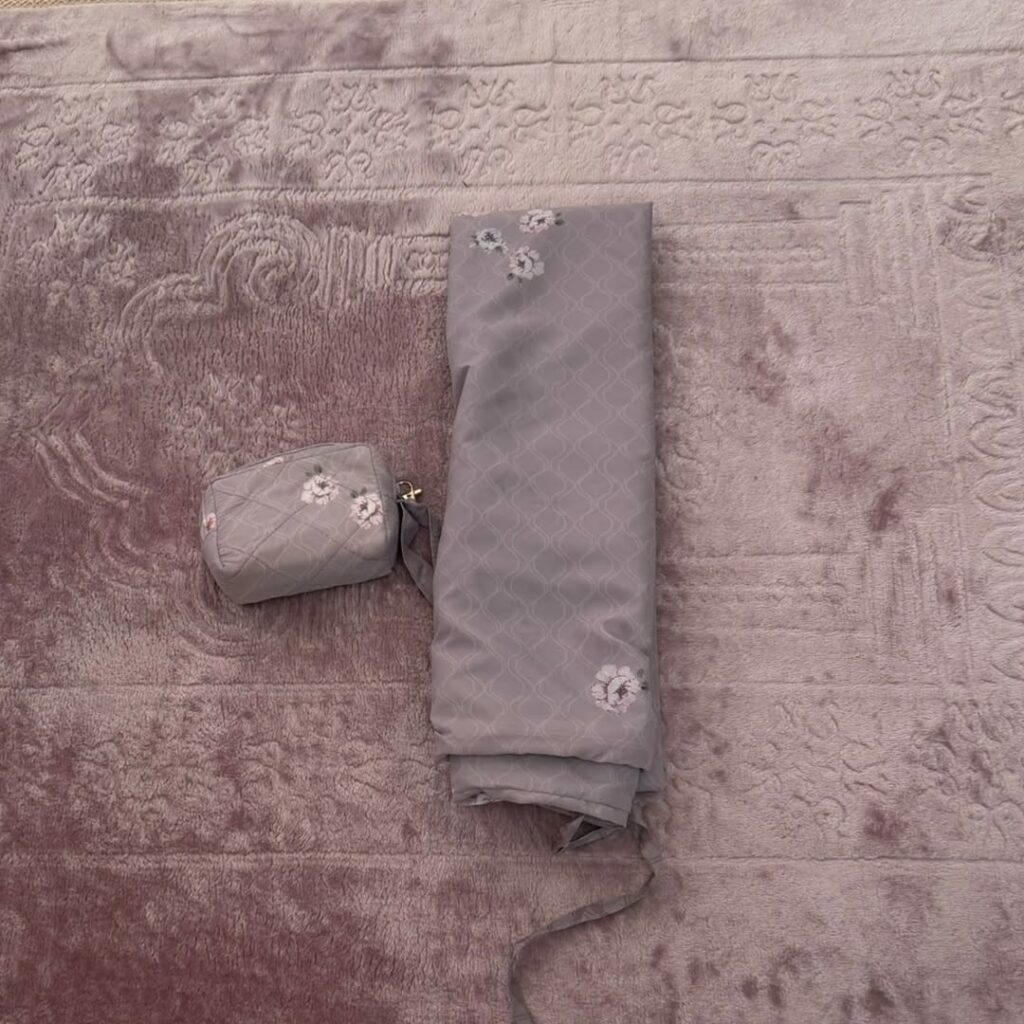
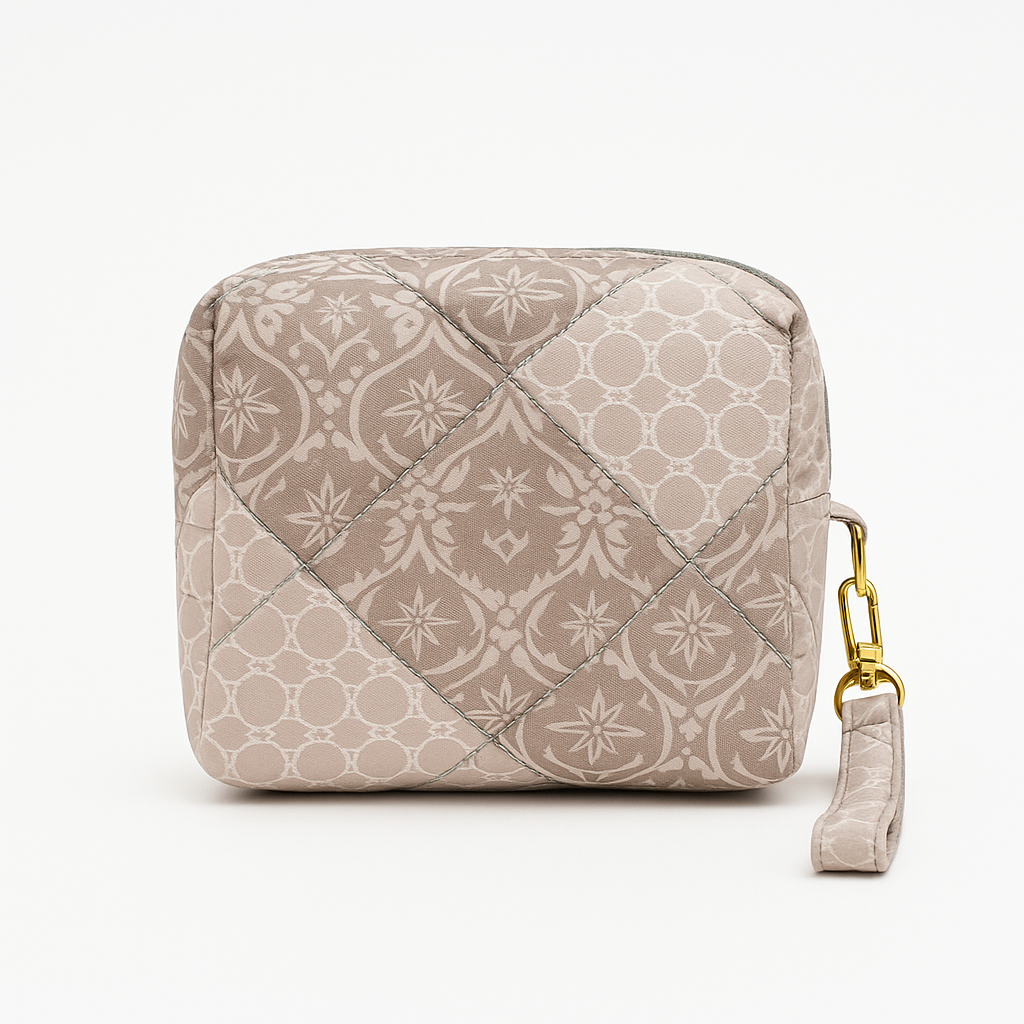
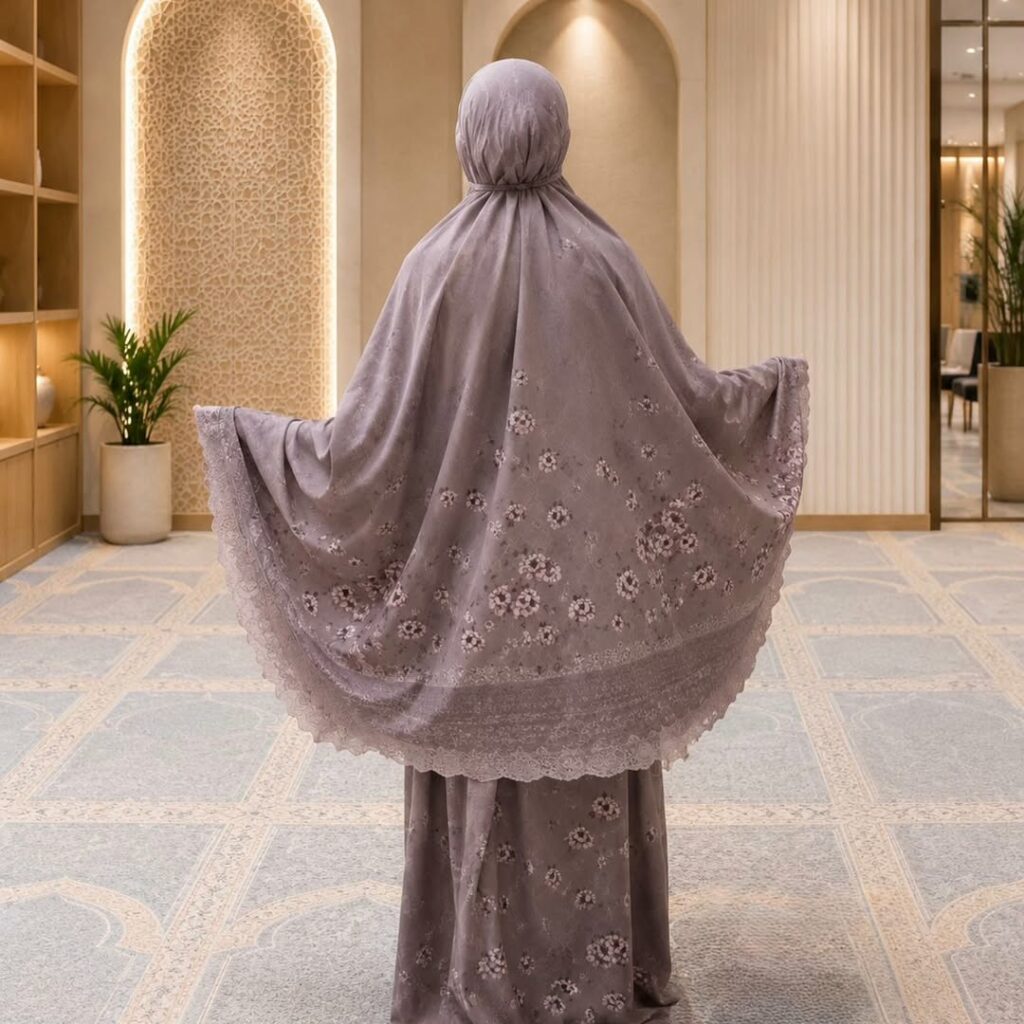
Here is the piece that changes travel days: a travel prayer set in its pouch, clipped inside your hand luggage. Whatever you are wearing — jeans, a short jacket, a scarf that slid around during the flight — you slip the one-piece set over it and you are fully covered for prayer in seconds. No planning your whole outfit around the possibility of praying at the gate. Combine it with the rules for shortening and combining prayers while traveling and a travel day never costs you a salah.
Carry-on checklist for the modest traveler
- Travel prayer set in pouch (doubles as a modesty backup layer)
- Spare underscarf and pins
- Large shawl (warmth + prayer mat surface in a pinch)
- Thick socks — for the plane and for wiping over in wudu
- Small unscented toiletries
Looking for a prayer set that travels as well as you do? Explore our Travel Prayer Sets with matching pouch — free delivery everywhere in the UAE.