How to Wash, Fold and Care for Your Prayer Clothes

Few garments in your wardrobe work harder than a prayer dress: five wears a day, every day. Cared for well, a quality set stays fresh and elegant for years. Here is the routine we recommend — tuned for Gulf conditions.

How often should prayer clothes be washed?

There is no fixed rule — the requirement is that the garment stays clean and free of impurity. Since a prayer dress is worn over your clothes for minutes at a time, weekly washing is plenty for a home set in normal use; a travel set that rides in your bag through summer may want washing a little more often. Between washes, hang it to air after Fajr rather than folding it away damp with sleep-warmth — airing is half of freshness.

Washing

  • Cold or 30°C, gentle cycle, inside a mesh laundry bag to protect lace trims and chin closures.
  • Mild detergent, no bleach. Optical brighteners slowly dull soft colours like taupe and dusty mauve.
  • Skip the fabric softener on lightweight woven fabrics — it coats the fibres and reduces breathability, which you will feel in July.
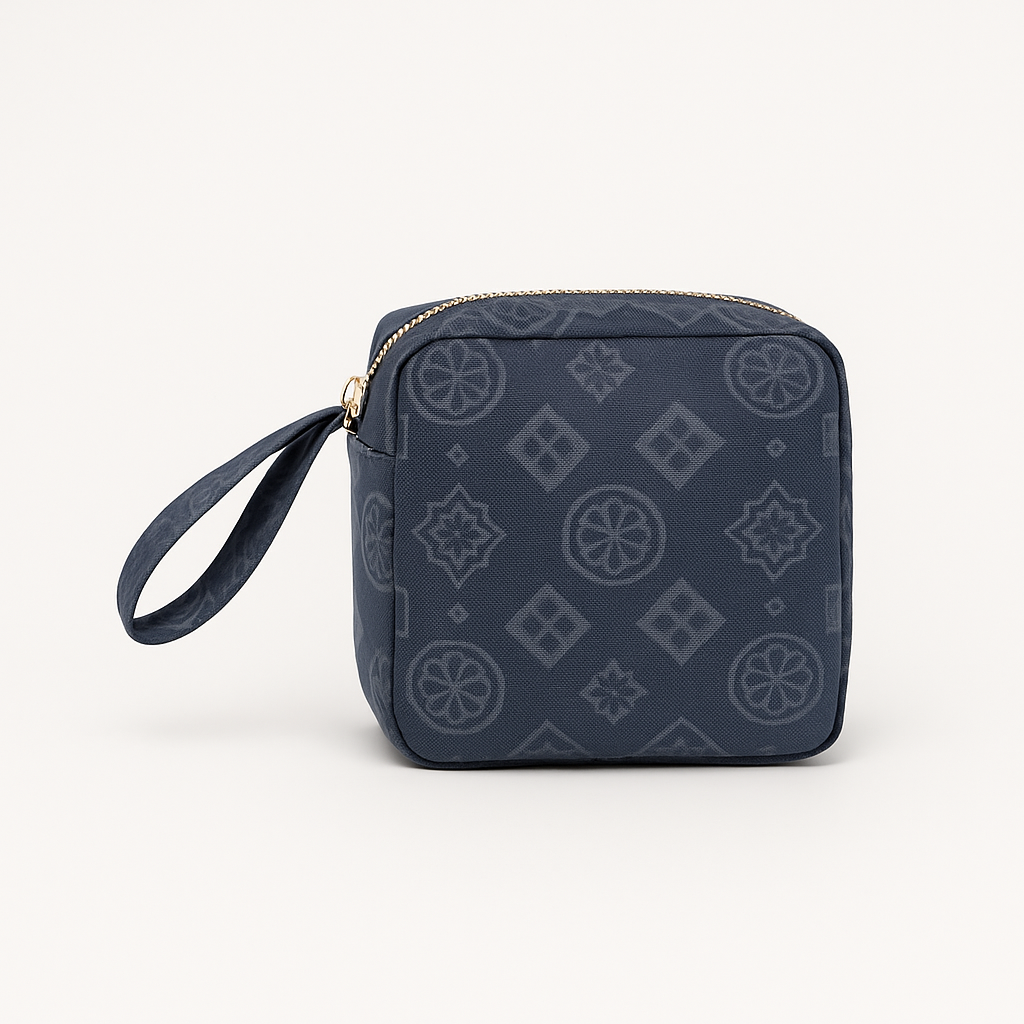
  • Wash the matching pouch on the same cycle; zip it closed first.

Drying — the Gulf-specific part

Our sun is a blessing and a hazard. Direct summer sun will dry a prayer set in twenty minutes — and fade it in a season. Dry in the shade, on a hanger, indoors under AC or on a shaded balcony. Avoid the tumble dryer: heat is what breaks elastic face-openings and sets wrinkles into light fabrics.

Ironing and wrinkles

Most travel prayer fabrics shed wrinkles if hung overnight. If you do iron, use the lowest steam setting through a thin cotton cloth. A trick for the travel set: fold it back into its pouch immediately after it cools from ironing — it comes out crisp days later.

Folding into the pouch (the right way)

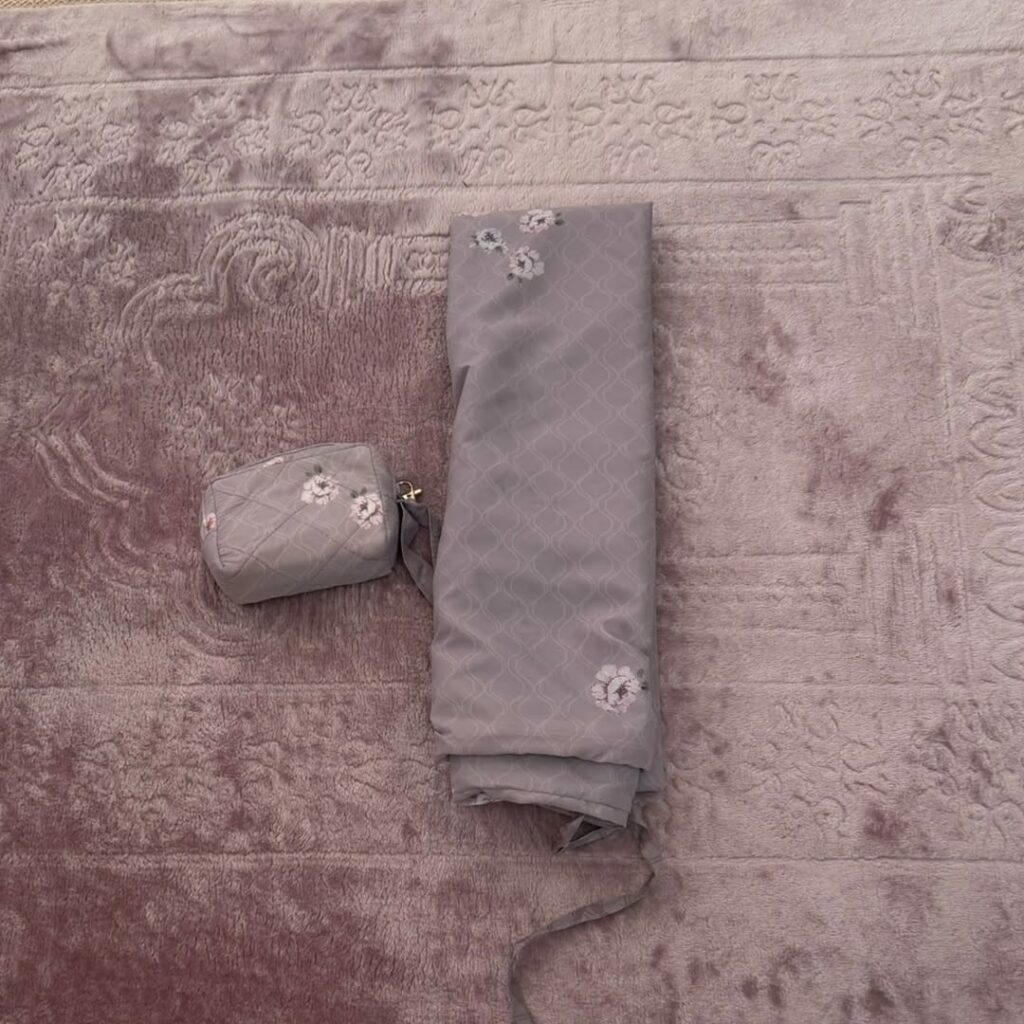
  1. Lay the skirt flat, fold into thirds lengthwise, then roll from the waistband down.
  2. Lay the khimar flat with the face-opening centred, fold the sides in, place the rolled skirt at the bottom edge and roll them together.
  3. The roll should slide into the pouch without forcing — compressing hard sets creases and strains the zip.

Rolling instead of flat-folding is why a two-piece set comes out of its pouch wearable, not crumpled.

Storage

  • At home: on a dedicated hook by your prayer corner, or folded in a drawer — not compressed under heavy clothes.
  • In the car: fine in the pouch, but not on the parcel shelf in summer; a glovebox or seat pocket protects the fabric from 70°C dashboard temperatures.
  • Long term: clean and completely dry before storing; a cedar block deters moths from natural-fibre sets.

When to replace

When fabric turns translucent at the shoulders or the face-opening no longer sits snugly, the garment has served its purpose with honour. Downgrade it to a guest or car spare and treat yourself to a new one — your five daily appointments deserve it. Our Travel Prayer Sets are 80 AED with free UAE delivery over 99 AED, and returns are easy within 14 days.

Tahajjud for Beginners: How to Start Praying the Night Prayer

There is a prayer the Quran describes as a private appointment: “And in part of the night, pray tahajjud as an extra offering for you; it may be that your Lord will raise you to a praised station.” (Surah al-Isra, 17:79). No congregation, no announcement — just you, standing while the city sleeps.

What is tahajjud, exactly?

Tahajjud is voluntary prayer performed at night, ideally after some sleep. It falls under the broader term qiyam al-layl (standing in the night). The Prophet ﷺ said: “The best prayer after the obligatory prayer is the night prayer.” (Sahih Muslim)

When is the best time?

Any time between Isha and Fajr counts, but the most beloved window is the last third of the night, when — as the Prophet ﷺ told us — our Lord descends in a manner befitting His majesty and asks: “Who is calling upon Me, that I may answer him? Who is asking of Me, that I may give him?” (al-Bukhari, Muslim)

To find it: divide the time between Maghrib and Fajr into three. In a Gulf summer, with Fajr around 4 a.m., the last third begins roughly around 1:30 a.m. — which sounds heroic until you realise even 20 minutes before your suhoor-time alarm counts fully.

How many rak’ahs?

There is no minimum. The Prophet ﷺ most often prayed eleven rak’ahs: pairs of two, closed with witr (Aisha, may Allah be pleased with her, in al-Bukhari). A beginner’s version that takes ten minutes:

  1. Two light rak’ahs to open
  2. Two rak’ahs with longer recitation — take your time in sujud, this is where dua pours out
  3. One rak’ah of witr (if you have not prayed witr after Isha)

Five rak’ahs, and you have prayed tahajjud. Quality of presence beats quantity every time.

How to actually wake up (the honest section)

  • Sleep with the intention. The Prophet ﷺ taught that whoever goes to bed intending to pray at night and sleeps through has the reward written anyway (an-Nasa’i). Intention costs nothing and changes everything.
  • Prepare the runway. Wudu before bed. Prayer mat unrolled, prayer dress laid out beside it. At 2 a.m., every removed obstacle counts double — if you have to search the wardrobe, you will choose the pillow.
  • Start with two nights a week. Consistency converts; ambition burns out. “The most beloved deeds to Allah are the most consistent, even if small.” (al-Bukhari)
  • Put the alarm across the room, labelled with the hadith about the last third. Argue with that.
  • Guard the evening. The real battle for tahajjud is fought at 11 p.m. against the phone screen.

What to ask for

Everything. This is the hour of Zakariyya’s dua and of hearts mended. Keep a note in your phone of the people who asked you to pray for them — the night prayer is when you honour it. And if a decision weighs on you, pair the night with the prayer of istikhara.

Begin tonight, small. Two rak’ahs in the dark, in a garment kept just for Him — and see what it does to your days.

What to Wear in Dubai: A Modest Style Guide for Every Occasion

Dubai is one of the easiest cities in the world to dress modestly — and one of the most stylish. Modest fashion is not the exception here; it is the main stage. Whether you live in the Emirates or are visiting, here is how to dress for every setting with grace and comfort.

The two rules that explain everything

  1. Respect in public spaces. The UAE asks that shoulders and knees be covered in malls, souks and government buildings. For the modest dresser, this is already home ground.
  2. Dress for the air conditioning, not just the sun. Outside it may be 42°C; inside the mall it is 19°C. Layers are not optional in Dubai — they are survival.

Malls, souks and everyday errands

Flowy midi and maxi dresses, wide-leg trousers with longline shirts, light abayas over anything. Natural and breathable fabrics — linen, cotton, viscose — beat synthetics from May to October. Keep a light cardigan or shawl in your bag for the AC blast.

Visiting a mosque

For the Sheikh Zayed Grand Mosque in Abu Dhabi and Jumeirah Mosque in Dubai, the dress code is specific: loose clothing to the wrists and ankles, hair covered, nothing transparent. Abayas are sometimes available to borrow at the entrance — but arriving prepared is more comfortable and more elegant. A fold-away prayer set in your handbag covers you (literally) for any spontaneous mosque visit, and doubles as your prayer outfit for the trip.

Beach and pool

Burkinis and full-coverage swimwear are completely normal on Dubai’s public beaches and in most hotel pools. Add a longline kaftan or beach dress for the walk to and from the water, UV-protective if possible — the sun here does not negotiate.

Desert trips and outdoor adventures

Loose trousers or a maxi skirt with leggings underneath (dune winds are real), closed shoes, a securely wrapped scarf, sunglasses. Light colours photograph beautifully against the sand — the golden-hour abaya photo is a Gulf tradition for a reason.

The office and formal events

Dubai’s work wardrobe is polished: tailored wide trousers, midi skirts, crisp shirts, elegant abayas for Emirati dress codes. For weddings and iftars, this is the city of the statement abaya and the embellished kaftan — modest occasionwear is an art form here.

The Muslimah’s secret weapon: the handbag prayer kit

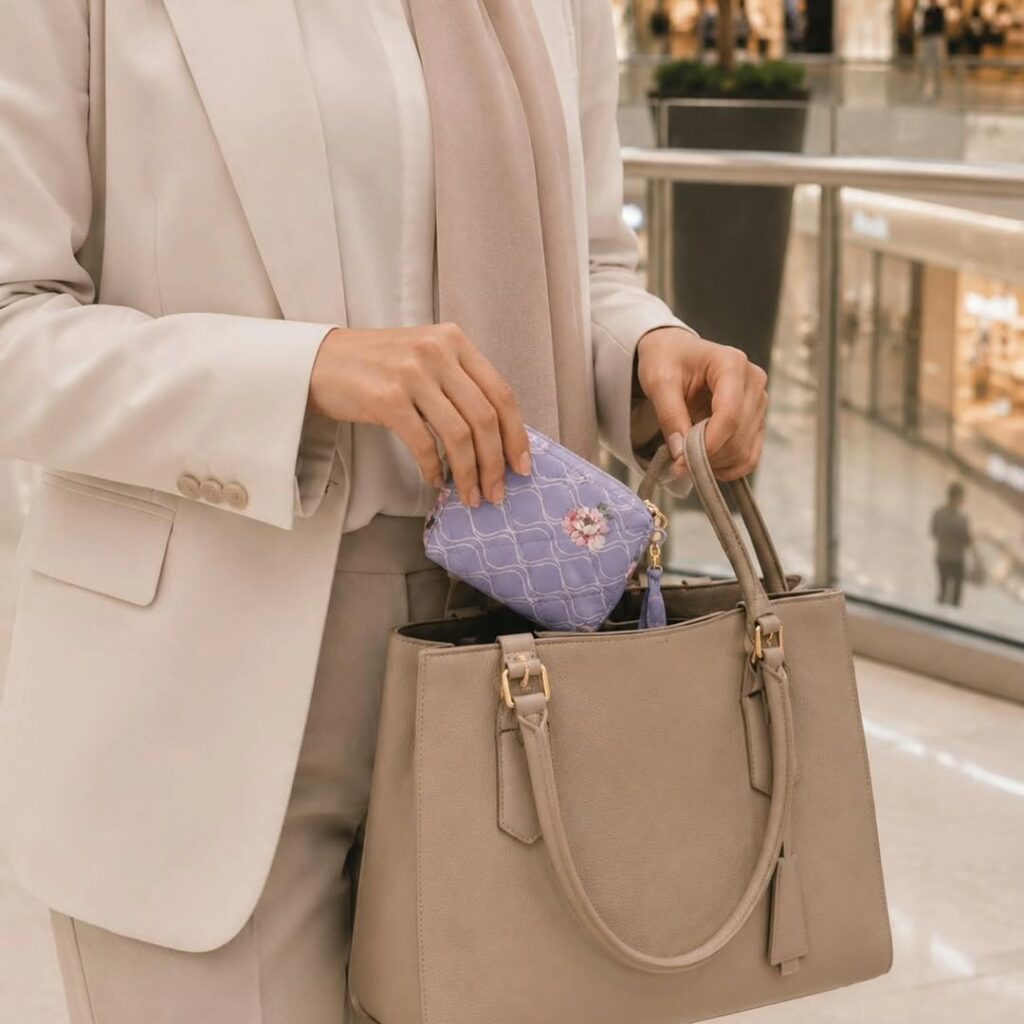
Dubai days run long — brunch to mall to dinner — and prayer times do not wait for you to get home. Every mall has a clean, well-kept prayer room; all you need is something to pray in. This is exactly what our Travel Prayer Sets were designed for: a full-coverage two-piece that folds into a pouch smaller than your makeup bag. Slip it in next to your sunglasses, and Dhuhr at Dubai Mall becomes the calmest ten minutes of your day.

Free delivery across the UAE on orders over 99 AED — see our delivery information.

Umrah Packing List for Women: Everything You Actually Need

Packing for Umrah is a balancing act: Makkah’s heat, long hours in the Haram, strict simplicity during ihram — and the strong temptation to overpack. This list is built for a 7–10 day trip from the Gulf, and it fits in one medium suitcase.

First: what does ihram mean for women?

Unlike men, women have no prescribed ihram garment. Your ihram is your ordinary modest clothing — loose, opaque, covering everything except the face and hands. During ihram a woman does not wear the niqab or gloves, and avoids perfume. Choose soft, breathable fabrics you can wear for many hours: cotton, viscose or bamboo blends work far better than polyester in the Hijaz heat.

The checklist

Documents & money

  • Passport (validity 6+ months) and visa confirmation
  • Nusuk app installed and permits booked (for Rawdah visits in Madinah)
  • Hotel and transport confirmations, printed and on your phone
  • Cards + some Saudi riyals in cash for taxis and sadaqah

Clothing

  • 2–3 loose abayas or long dresses in light colours (dark colours absorb the sun on the marble courtyards)
  • 3–4 breathable hijabs, pre-tested so they stay put without pins during tawaf crowds
  • A two-piece prayer set — invaluable for praying at the hotel, in transit, and keeping your “Haram abayas” fresh
  • Comfortable underlayers and 5+ pairs of socks
  • Worn-in sandals or slip-on shoes (you will walk 15,000+ steps a day) + a shoe bag for inside the mosque

Hygiene & health — the unscented rule

  • Unscented soap, deodorant and wipes for the days of ihram (scented products are for after tahallul)
  • Vaseline or anti-chafing balm — the single most recommended item by seasoned pilgrims
  • Basic medicines: paracetamol, rehydration salts, plasters, your prescriptions
  • Small misting bottle and a folding fan for the courtyards
  • Umbrella — for sun far more than rain

For worship

  • Pocket Quran or Quran app with your reading plan
  • A small dua notebook — write your dua list before you travel; in front of the Kaaba the mind goes blank
  • Digital tasbih or counter ring for tawaf
  • Lightweight prayer mat for hotel rooms and crowded terrace prayers

Practical extras

  • Crossbody bag that zips — hands free for tawaf, secure in crowds
  • Refillable water bottle (you may bring Zamzam back in checked luggage — buy the sealed 5L containers at the airport)
  • Power bank; the Haram has few charging points
  • Snacks: dates, nuts — queues at restaurants are long after each prayer

What to leave at home

Jewellery beyond the essential, heavy makeup, more than three abayas, and anything you would be devastated to lose. The Haram teaches minimalism quickly.

One last tip

Keep your prayer set and one hijab in your hand luggage. Delayed suitcases are common on Jeddah routes, and your first prayer in Makkah should not depend on your checked bag. Our travel prayer sets fold into a pouch smaller than a book — designed for exactly this. And before you set off, review how to shorten and combine your prayers on the journey.

May Allah accept your Umrah and grant you a safe return.

Essential Duas for Travel Every Muslimah Should Know

The Prophet ﷺ said that three supplications are answered without doubt, and among them is the dua of the traveler (at-Tirmidhi). Travel strips away routine and comfort — and in return, it opens a direct line. Here are the duas to carry with you, from your front door to your return.

1. Leaving home

بِسْمِ اللَّهِ، تَوَكَّلْتُ عَلَى اللَّهِ، وَلَا حَوْلَ وَلَا قُوَّةَ إِلَّا بِاللَّهِ

Bismillah, tawakkaltu ‘ala Allah, wa la hawla wa la quwwata illa billah.

“In the name of Allah, I place my trust in Allah, and there is no might nor power except with Allah.” (Abu Dawud, at-Tirmidhi) — whoever says it is told: you are guided, sufficed and protected.

2. Boarding the car, plane or any ride: the dua of travel

اللَّهُ أَكْبَرُ، اللَّهُ أَكْبَرُ، اللَّهُ أَكْبَرُ، سُبْحَانَ الَّذِي سَخَّرَ لَنَا هَذَا وَمَا كُنَّا لَهُ مُقْرِنِينَ وَإِنَّا إِلَى رَبِّنَا لَمُنْقَلِبُونَ. اللَّهُمَّ إِنَّا نَسْأَلُكَ فِي سَفَرِنَا هَذَا الْبِرَّ وَالتَّقْوَى، وَمِنَ الْعَمَلِ مَا تَرْضَى، اللَّهُمَّ هَوِّنْ عَلَيْنَا سَفَرَنَا هَذَا وَاطْوِ عَنَّا بُعْدَهُ، اللَّهُمَّ أَنْتَ الصَّاحِبُ فِي السَّفَرِ وَالْخَلِيفَةُ فِي الْأَهْلِ

Allahu akbar, Allahu akbar, Allahu akbar. Subhana-lladhi sakhkhara lana hadha wa ma kunna lahu muqrinin, wa inna ila rabbina la-munqalibun. Allahumma inna nas’aluka fi safarina hadha-l-birra wa-t-taqwa, wa mina-l-‘amali ma tarda. Allahumma hawwin ‘alayna safarana hadha, wa-twi ‘anna bu’dah. Allahumma anta-s-sahibu fi-s-safar, wa-l-khalifatu fi-l-ahl.

“Allah is the Greatest (×3). Glory be to the One who subjected this to us, for we could never have done it ourselves — and to our Lord we shall surely return. O Allah, we ask You on this journey of ours for righteousness and taqwa, and for deeds that please You. O Allah, make this journey easy for us and fold up its distance. O Allah, You are the Companion on the journey and the Guardian of the family left behind.” (Sahih Muslim)

Hearing the engine start and murmuring subhana-lladhi sakhkhara lana hadha turns even the school run into remembrance.

3. When the journey is hard or you fear something

حَسْبُنَا اللَّهُ وَنِعْمَ الْوَكِيلُ

Hasbuna Allahu wa ni’ma-l-wakil. — “Allah is sufficient for us, and He is the best Disposer of affairs.” (Surah Al ‘Imran, 3:173)

4. Arriving at a new place

أَعُوذُ بِكَلِمَاتِ اللَّهِ التَّامَّاتِ مِنْ شَرِّ مَا خَلَقَ

A’udhu bi-kalimati-llahi-t-tammati min sharri ma khalaq.

“I seek refuge in the perfect words of Allah from the evil of what He has created.” (Sahih Muslim) — whoever says it on arrival, nothing will harm her until she departs from that place.

5. Returning home

The Prophet ﷺ would return saying the travel takbirs and add: “Ayibuna, ta’ibuna, ‘abiduna, li-rabbina hamidun” — “We return, repenting, worshipping, and praising our Lord.” (Muslim). It was also his practice ﷺ to go first to the mosque and pray two rak’ahs upon returning from a journey.

Make dua — and tie your camel

Trust in Allah travels best alongside preparation: prayers planned around your itinerary (here is how to shorten and combine prayers as a traveler), and a prayer kit that never leaves your bag. Our Travel Prayer Sets fold into a handbag-sized pouch precisely so that the answered dua of the traveler can be followed, minutes later, by her prayer.

How to Pray While Traveling: Qasr and Jam’ Made Simple

Travel is one of the few situations where Allah has deliberately lightened the prayer — a mercy the Prophet ﷺ called “a charity which Allah has given you, so accept His charity.” Yet many of us still feel unsure: how far do I have to travel? Which prayers can I combine? What about the plane? Here is the practical version.

Shortening the prayer (qasr)

When you are a traveler, the four-rak’ah prayers — Dhuhr, Asr and Isha — are shortened to two rak’ahs. Fajr and Maghrib stay as they are.

  • What counts as travel? Most scholars set the threshold around 80 km (48 miles) one way. A Dubai–Abu Dhabi trip qualifies; your daily commute across town does not.
  • For how long? If you intend to stay somewhere for more than about four days, the majority view is that you resume full prayers once you arrive. Short stays, stopovers and the journey itself: keep shortening.
  • Behind a resident imam? If you pray in congregation behind a non-traveling imam, you complete the four rak’ahs with him.

Combining prayers (jam’)

A traveler may pray Dhuhr and Asr together, and Maghrib and Isha together — either at the time of the earlier prayer or the later one, whichever is easier for your itinerary. Fajr is never combined with anything.

This is what makes long travel days manageable: pray Dhuhr and Asr back-to-back before boarding, and Maghrib and Isha after you land.

Praying in airports — easier in the Gulf than anywhere

If you fly through the region, you are spoiled: Dubai, Abu Dhabi, Doha, Jeddah and Riyadh airports all have dedicated prayer rooms in every terminal, usually signposted from the main concourse, with wudu facilities. Elsewhere in the world, look for the “multi-faith room” — or simply find a quiet gate corner. A clean, dry spot is all the sunnah requires.

Praying on the plane

  • Timing: combining is your friend. Plan the journey so that most prayers fall before departure or after arrival.
  • If a prayer will expire mid-flight: pray on board. Stand in the galley area if the crew allows it; otherwise pray seated, bowing your head slightly deeper for sujud than for ruku’.
  • Qibla: use a qibla app before take-off, or ask the crew — Gulf carriers often display the qibla direction on the seat screen.
  • Wudu: make it in the terminal before boarding. If water is impractical on board and the time is running out, tayammum rules can apply — but with good planning you will rarely need it.

The traveling Muslimah’s prayer kit

The hardest part of praying on the move is often not fiqh — it is logistics. Where do I find something clean and covering to pray in, right now? A checklist that lives permanently in your carry-on solves it:

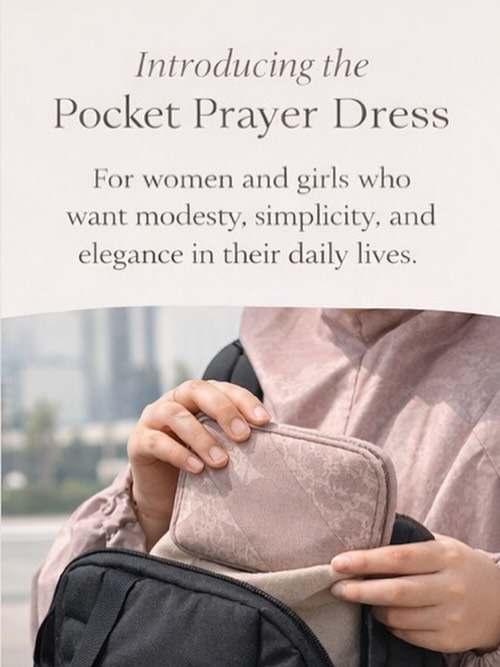
  • A compact prayer dress that folds into its own pouch — ours weighs little more than a scarf and clips into a backpack or handbag
  • A thin travel prayer mat (or a large clean scarf)
  • A qibla / prayer times app set to your destination
  • Socks, so you can pray comfortably in public prayer rooms

With the kit sorted, a stopover prayer takes five minutes — and travel starts to feel like what the Prophet ﷺ said it is: an act of worship in motion. For the words to say as you set off, see our guide to the essential duas for travel.

How to Stay Consistent with Your Five Daily Prayers (Even on Busy Days)

Nobody plans to miss Asr. It happens in the gap between a meeting that ran long and the school pickup, in the “I’ll pray when I get home” that meets Maghrib on the highway. Consistency in salah is rarely about faith — it is about systems. Here are the ones that work.

1. Anchor prayers to events, not clock times

Habits attach best to things you already do. Fajr anchors to waking, Dhuhr to lunch, Asr to the afternoon coffee, Maghrib to arriving home, Isha to winding down. When the anchor happens, the prayer happens — before the anchor’s own activity. Pray Dhuhr then eat, and lunch becomes your reminder forever.

2. Shrink the setup to under two minutes

Every step between intention and takbir is a place to lose the prayer. Audit your friction:

  • At home: a fixed prayer corner — mat always down, prayer dress on a hook beside it. If you have to assemble your prayer space each time, you will negotiate with yourself each time.
  • At work: a second prayer set that lives in your desk drawer or locker. Most Gulf offices have a prayer room; the set that is already there is the one that gets used.
  • In the car / handbag: a fold-away travel set means a mall prayer room, a petrol station musalla or a friend’s house are all fully equipped stops. Two sets cross our free-delivery threshold — one for the bag, one for the drawer.

3. Use the adhan, not a to-do list

Set a prayer-times app to the actual adhan sound with your city’s timings, and treat it like a meeting invite from the most important One on your calendar. Silent notifications are designed to be ignored; the adhan is designed not to be.

4. Pray at the beginning of the time

When asked which deed is most beloved to Allah, the Prophet ﷺ answered: “Prayer at its (earliest) time.” (al-Bukhari, Muslim). Practically, the start of the window is when your energy and schedule are still yours. Delay hands your prayer to traffic, guests and fatigue.

5. Never skip twice

Borrowed from habit science, perfectly Islamic in spirit: if a prayer is missed, make it up immediately and guard the very next one. One miss is an accident; two is the beginning of a pattern. And leave guilt out of it — “the most beloved deeds to Allah are the most consistent, even if small” (al-Bukhari). Return, quietly, every time.

6. Recruit your people

Pray Maghrib together as a household, even occasionally — children who see prayer as a family rhythm inherit the rhythm. A friend who texts “prayed?” during a busy season is worth ten reminder apps. This is community as infrastructure.

7. Protect Fajr, and the day follows

Fajr is the keystone: win it and the other four line up with strange ease. Sleep with wudu, keep your prayer clothes within arm’s reach of the bed, and put the phone to charge across the room. If you want to go further, tahajjud is closer than you think — see our beginner’s guide to the night prayer.

Five daily meetings, kept for a lifetime, are built out of small mercies you arrange for your future self. Arrange them today — starting with the simplest: something beautiful and ready to pray in, wherever the adhan finds you.

What Is a Prayer Dress? Why Every Muslim Woman Needs One

Ask around the Muslim world and you will hear a dozen names for it: isdal in the Gulf and Egypt, mukena in Indonesia, telekung in Malaysia, jilbab de prière in France. In English it is simply the prayer dress — a garment kept aside for one purpose: making salah simple, correct and beautiful.

What does salah require of your clothing?

For a woman’s prayer to be valid, her clothing must cover the entire body except the face and hands, in fabric that is:

  • Opaque — skin colour should not show through, even under mosque lighting
  • Loose — not tracing the shape of the body in ruku’ and sujud
  • Clean — free of impurities

Everyday clothes can meet these conditions, of course. But in practice — leggings that show in sujud, a hijab that slips back mid-rak’ah, a top that rides up — many of us have spent a whole prayer adjusting instead of concentrating. A prayer dress removes the question entirely.

One piece or two?

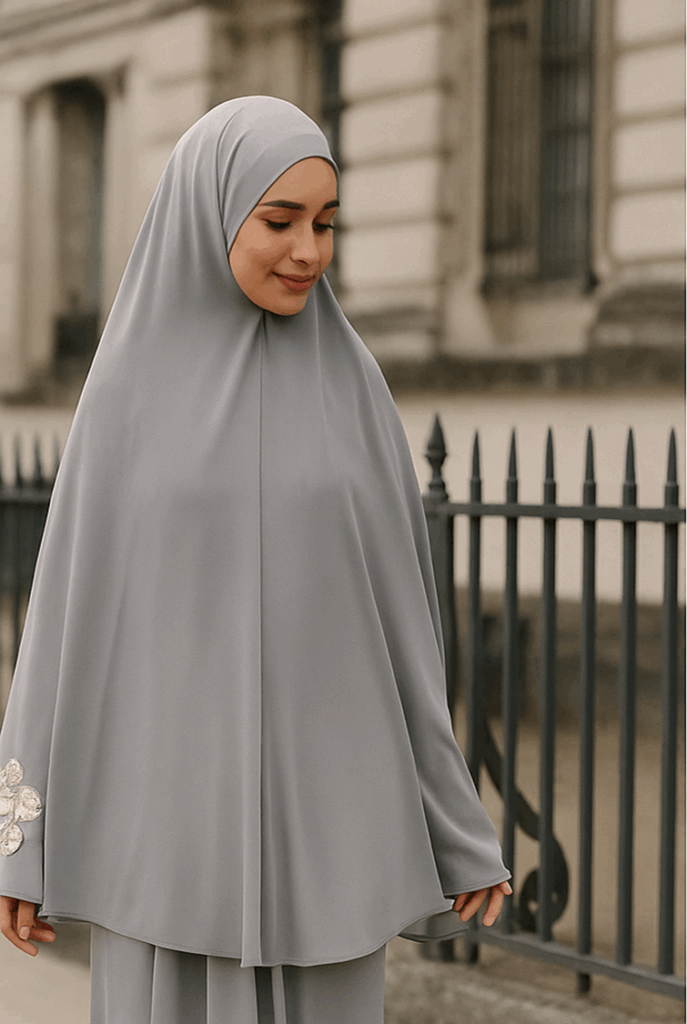
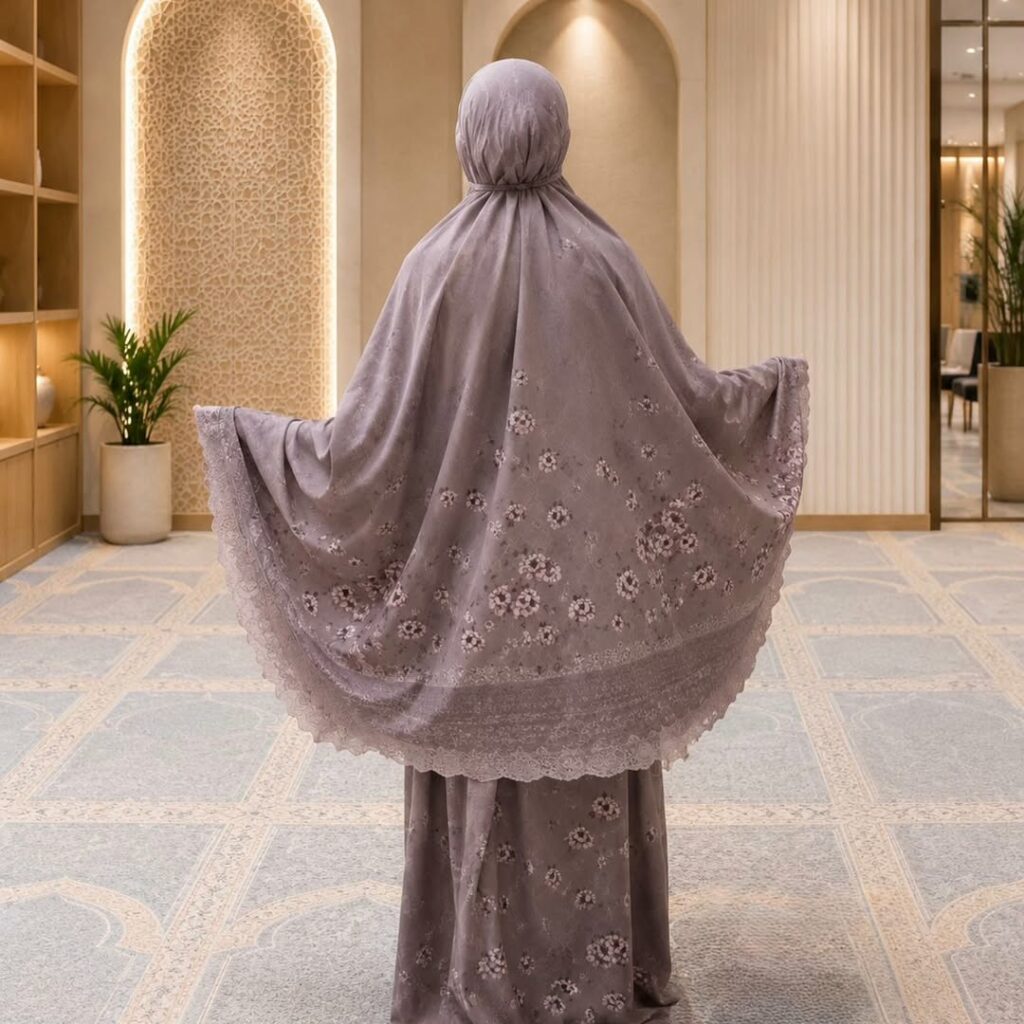
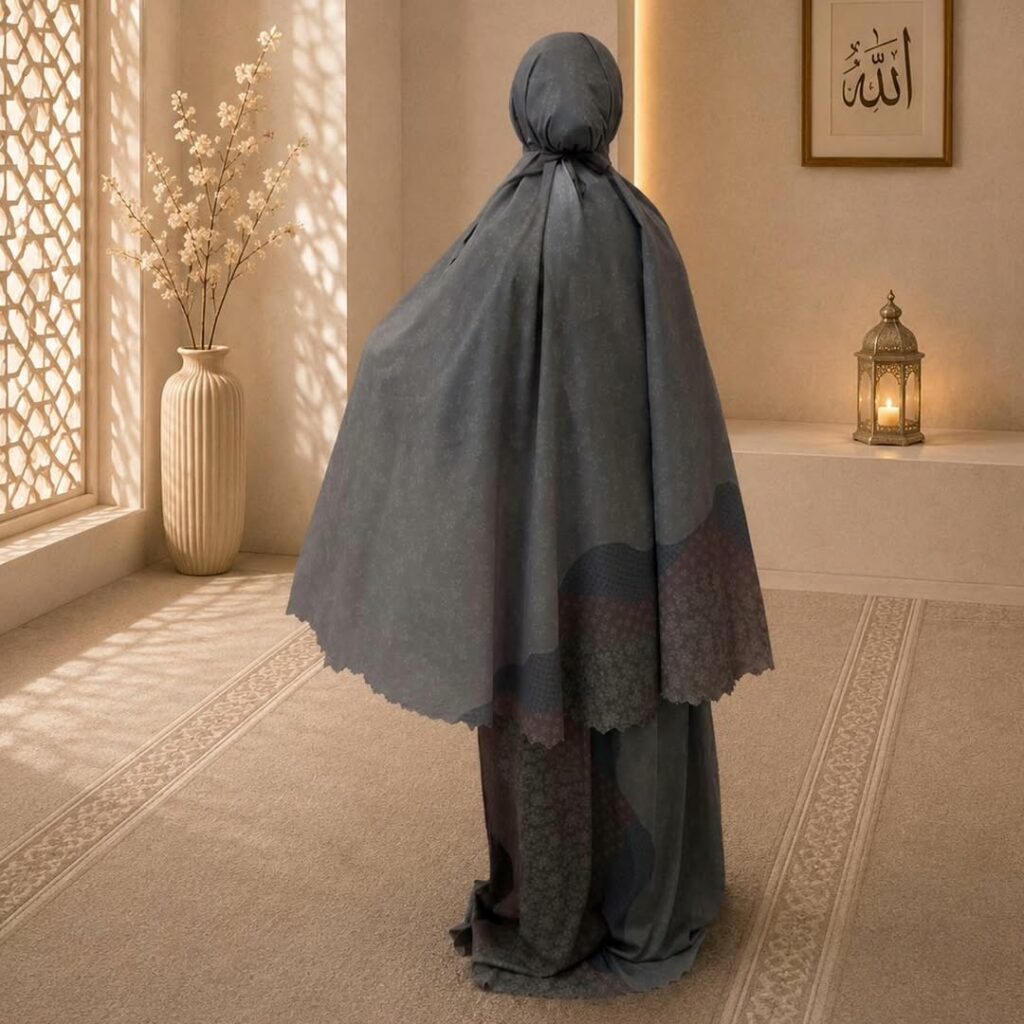
One-piece prayer dresses pull over the head — nothing to align, ideal for children and for keeping by the bed for Fajr. Two-piece sets (a khimar covering to the waist or hips, plus a full skirt) are more breathable, easier to size, and much faster to fold small — which is why the two-piece is the format we chose for the Maison Haya travel sets.

Why keep a dedicated prayer garment?

  1. Zero friction. The adhan sounds, you slip it on over whatever you are wearing, and you are ready. No outfit audit.
  2. Guaranteed coverage. Designed for sujud: no gaps at the wrist, no hem lifting, chin coverage that stays put.
  3. Cleanliness. Your prayer clothes stay reserved for prayer — worn minutes a day, always fresh. (See how to care for prayer clothes.)
  4. Presence of heart. The Prophet ﷺ was distracted in prayer by a patterned garment and asked for it to be taken away (al-Bukhari). A garment that only means prayer does the opposite: putting it on becomes a ritual that tells your mind, we are standing before Allah now.
  5. Hospitality. A spare set means any guest can pray comfortably at your home — a small kindness with a big reward.

How to choose a good one

  • Fabric first. In the Gulf climate, look for lightweight woven fabrics that breathe and do not cling with static. Avoid anything shiny-thin that needs a slip underneath — that defeats the purpose.
  • Test the sujud. A good cut keeps your lower back covered when you fold forward, without a metre of extra fabric pooling around you.
  • Face opening. It should frame the face snugly without pins and without pressing on the forehead where it meets the ground.
  • Portability. If it cannot leave the house, it will only serve half your prayers. Our sets fold into their own matching zip pouch — handbag-sized, so Dhuhr at the office or Asr at the mall is never a problem.

A prayer dress is one of those rare purchases that is used five times a day, every day, for years. Choose one made with care — and it quietly upgrades every single prayer. Explore the Maison Haya collection: free delivery across the UAE on orders over 99 AED.