Umrah Packing List for Women: Everything You Actually Need

Packing for Umrah is a balancing act: Makkah’s heat, long hours in the Haram, strict simplicity during ihram — and the strong temptation to overpack. This list is built for a 7–10 day trip from the Gulf, and it fits in one medium suitcase.

First: what does ihram mean for women?

Unlike men, women have no prescribed ihram garment. Your ihram is your ordinary modest clothing — loose, opaque, covering everything except the face and hands. During ihram a woman does not wear the niqab or gloves, and avoids perfume. Choose soft, breathable fabrics you can wear for many hours: cotton, viscose or bamboo blends work far better than polyester in the Hijaz heat.

The checklist

Documents & money

  • Passport (validity 6+ months) and visa confirmation
  • Nusuk app installed and permits booked (for Rawdah visits in Madinah)
  • Hotel and transport confirmations, printed and on your phone
  • Cards + some Saudi riyals in cash for taxis and sadaqah

Clothing

  • 2–3 loose abayas or long dresses in light colours (dark colours absorb the sun on the marble courtyards)
  • 3–4 breathable hijabs, pre-tested so they stay put without pins during tawaf crowds
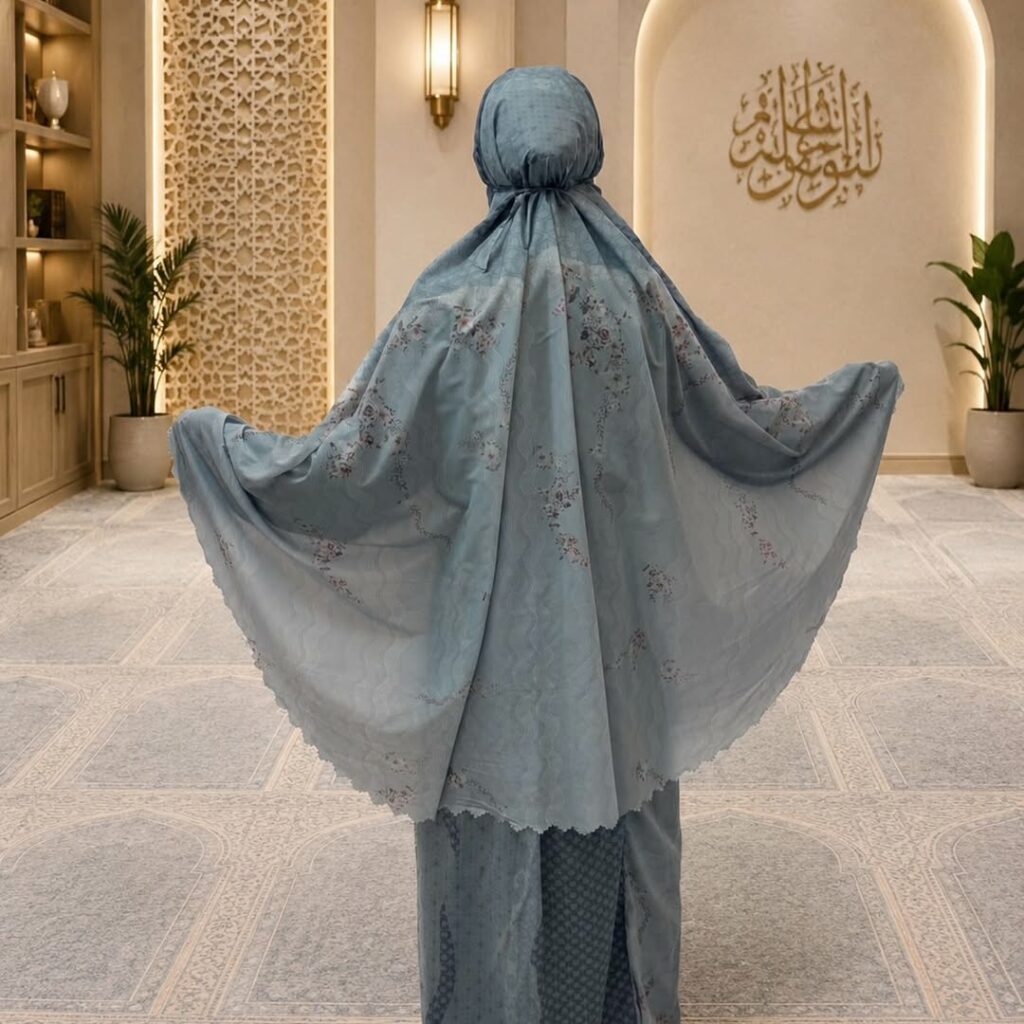
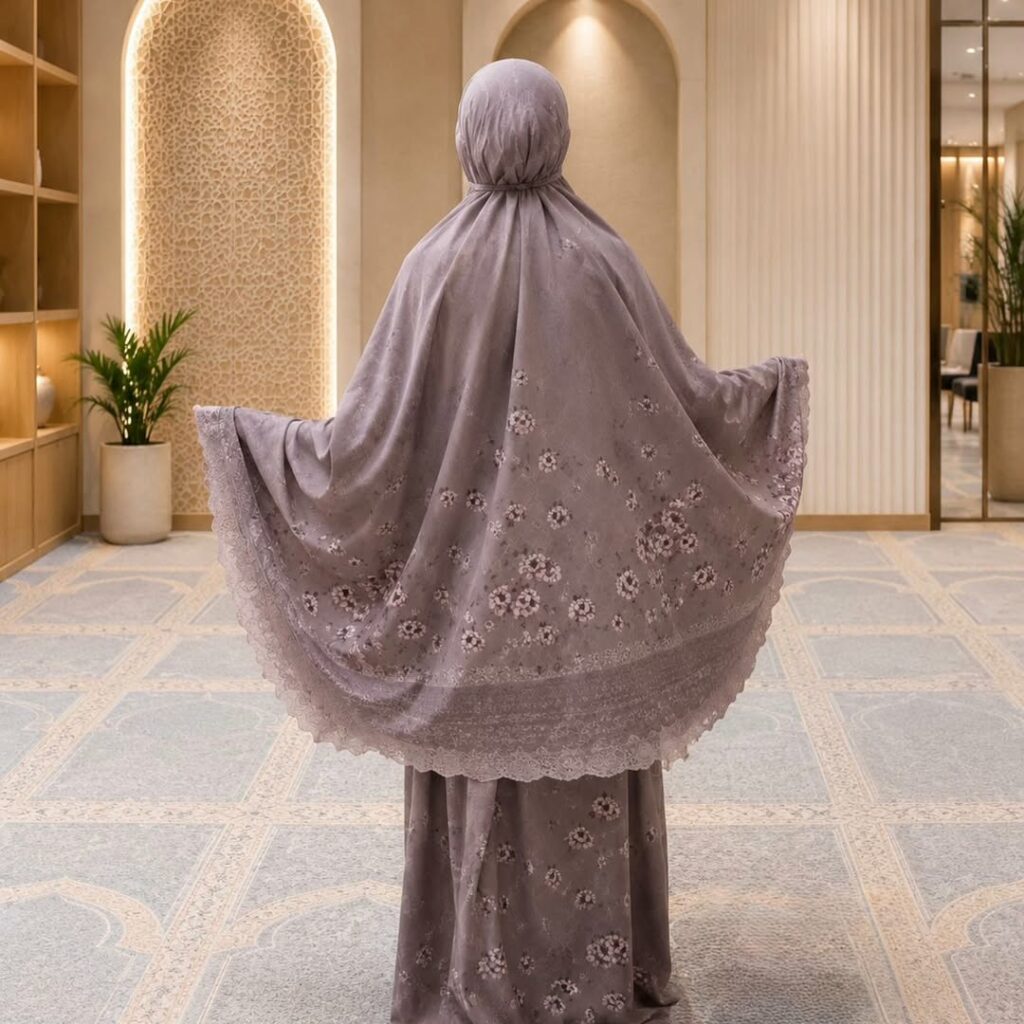
  • A two-piece prayer set — invaluable for praying at the hotel, in transit, and keeping your “Haram abayas” fresh
  • Comfortable underlayers and 5+ pairs of socks
  • Worn-in sandals or slip-on shoes (you will walk 15,000+ steps a day) + a shoe bag for inside the mosque

Hygiene & health — the unscented rule

  • Unscented soap, deodorant and wipes for the days of ihram (scented products are for after tahallul)
  • Vaseline or anti-chafing balm — the single most recommended item by seasoned pilgrims
  • Basic medicines: paracetamol, rehydration salts, plasters, your prescriptions
  • Small misting bottle and a folding fan for the courtyards
  • Umbrella — for sun far more than rain

For worship

  • Pocket Quran or Quran app with your reading plan
  • A small dua notebook — write your dua list before you travel; in front of the Kaaba the mind goes blank
  • Digital tasbih or counter ring for tawaf
  • Lightweight prayer mat for hotel rooms and crowded terrace prayers

Practical extras

  • Crossbody bag that zips — hands free for tawaf, secure in crowds
  • Refillable water bottle (you may bring Zamzam back in checked luggage — buy the sealed 5L containers at the airport)
  • Power bank; the Haram has few charging points
  • Snacks: dates, nuts — queues at restaurants are long after each prayer

What to leave at home

Jewellery beyond the essential, heavy makeup, more than three abayas, and anything you would be devastated to lose. The Haram teaches minimalism quickly.

One last tip

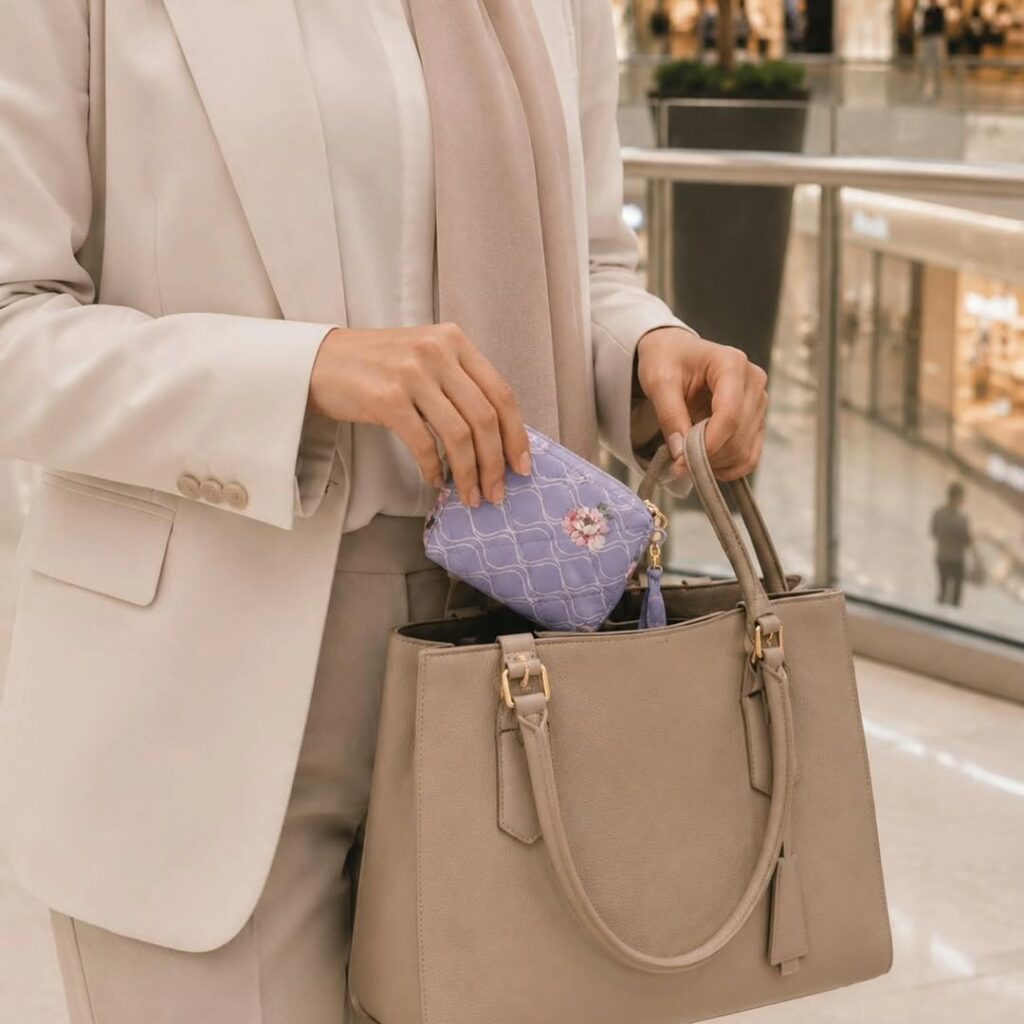
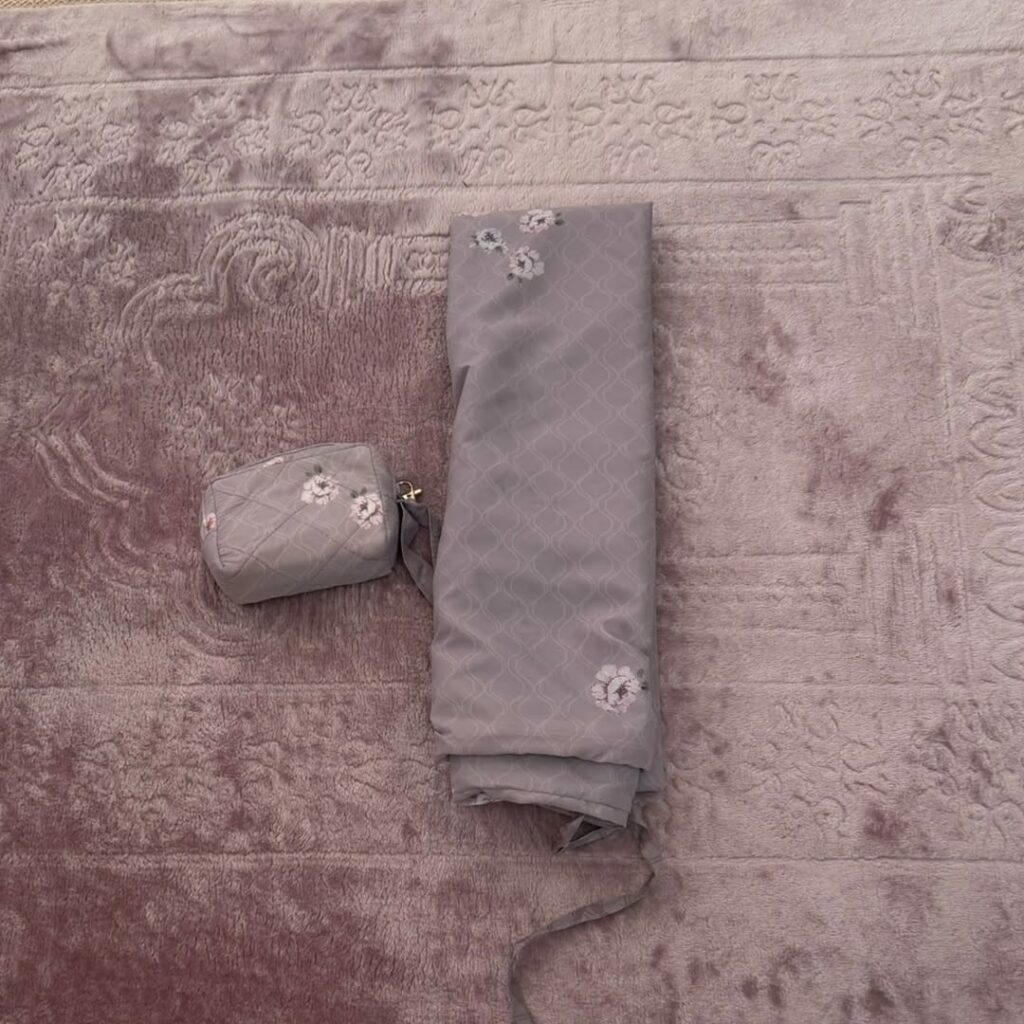
Keep your prayer set and one hijab in your hand luggage. Delayed suitcases are common on Jeddah routes, and your first prayer in Makkah should not depend on your checked bag. Our travel prayer sets fold into a pouch smaller than a book — designed for exactly this. And before you set off, review how to shorten and combine your prayers on the journey.

May Allah accept your Umrah and grant you a safe return.

Essential Duas for Travel Every Muslimah Should Know

The Prophet ﷺ said that three supplications are answered without doubt, and among them is the dua of the traveler (at-Tirmidhi). Travel strips away routine and comfort — and in return, it opens a direct line. Here are the duas to carry with you, from your front door to your return.

1. Leaving home

بِسْمِ اللَّهِ، تَوَكَّلْتُ عَلَى اللَّهِ، وَلَا حَوْلَ وَلَا قُوَّةَ إِلَّا بِاللَّهِ

Bismillah, tawakkaltu ‘ala Allah, wa la hawla wa la quwwata illa billah.

“In the name of Allah, I place my trust in Allah, and there is no might nor power except with Allah.” (Abu Dawud, at-Tirmidhi) — whoever says it is told: you are guided, sufficed and protected.

2. Boarding the car, plane or any ride: the dua of travel

اللَّهُ أَكْبَرُ، اللَّهُ أَكْبَرُ، اللَّهُ أَكْبَرُ، سُبْحَانَ الَّذِي سَخَّرَ لَنَا هَذَا وَمَا كُنَّا لَهُ مُقْرِنِينَ وَإِنَّا إِلَى رَبِّنَا لَمُنْقَلِبُونَ. اللَّهُمَّ إِنَّا نَسْأَلُكَ فِي سَفَرِنَا هَذَا الْبِرَّ وَالتَّقْوَى، وَمِنَ الْعَمَلِ مَا تَرْضَى، اللَّهُمَّ هَوِّنْ عَلَيْنَا سَفَرَنَا هَذَا وَاطْوِ عَنَّا بُعْدَهُ، اللَّهُمَّ أَنْتَ الصَّاحِبُ فِي السَّفَرِ وَالْخَلِيفَةُ فِي الْأَهْلِ

Allahu akbar, Allahu akbar, Allahu akbar. Subhana-lladhi sakhkhara lana hadha wa ma kunna lahu muqrinin, wa inna ila rabbina la-munqalibun. Allahumma inna nas’aluka fi safarina hadha-l-birra wa-t-taqwa, wa mina-l-‘amali ma tarda. Allahumma hawwin ‘alayna safarana hadha, wa-twi ‘anna bu’dah. Allahumma anta-s-sahibu fi-s-safar, wa-l-khalifatu fi-l-ahl.

“Allah is the Greatest (×3). Glory be to the One who subjected this to us, for we could never have done it ourselves — and to our Lord we shall surely return. O Allah, we ask You on this journey of ours for righteousness and taqwa, and for deeds that please You. O Allah, make this journey easy for us and fold up its distance. O Allah, You are the Companion on the journey and the Guardian of the family left behind.” (Sahih Muslim)

Hearing the engine start and murmuring subhana-lladhi sakhkhara lana hadha turns even the school run into remembrance.

3. When the journey is hard or you fear something

حَسْبُنَا اللَّهُ وَنِعْمَ الْوَكِيلُ

Hasbuna Allahu wa ni’ma-l-wakil. — “Allah is sufficient for us, and He is the best Disposer of affairs.” (Surah Al ‘Imran, 3:173)

4. Arriving at a new place

أَعُوذُ بِكَلِمَاتِ اللَّهِ التَّامَّاتِ مِنْ شَرِّ مَا خَلَقَ

A’udhu bi-kalimati-llahi-t-tammati min sharri ma khalaq.

“I seek refuge in the perfect words of Allah from the evil of what He has created.” (Sahih Muslim) — whoever says it on arrival, nothing will harm her until she departs from that place.

5. Returning home

The Prophet ﷺ would return saying the travel takbirs and add: “Ayibuna, ta’ibuna, ‘abiduna, li-rabbina hamidun” — “We return, repenting, worshipping, and praising our Lord.” (Muslim). It was also his practice ﷺ to go first to the mosque and pray two rak’ahs upon returning from a journey.

Make dua — and tie your camel

Trust in Allah travels best alongside preparation: prayers planned around your itinerary (here is how to shorten and combine prayers as a traveler), and a prayer kit that never leaves your bag. Our Travel Prayer Sets fold into a handbag-sized pouch precisely so that the answered dua of the traveler can be followed, minutes later, by her prayer.

How to Pray While Traveling: Qasr and Jam’ Made Simple

Travel is one of the few situations where Allah has deliberately lightened the prayer — a mercy the Prophet ﷺ called “a charity which Allah has given you, so accept His charity.” Yet many of us still feel unsure: how far do I have to travel? Which prayers can I combine? What about the plane? Here is the practical version.

Shortening the prayer (qasr)

When you are a traveler, the four-rak’ah prayers — Dhuhr, Asr and Isha — are shortened to two rak’ahs. Fajr and Maghrib stay as they are.

  • What counts as travel? Most scholars set the threshold around 80 km (48 miles) one way. A Dubai–Abu Dhabi trip qualifies; your daily commute across town does not.
  • For how long? If you intend to stay somewhere for more than about four days, the majority view is that you resume full prayers once you arrive. Short stays, stopovers and the journey itself: keep shortening.
  • Behind a resident imam? If you pray in congregation behind a non-traveling imam, you complete the four rak’ahs with him.

Combining prayers (jam’)

A traveler may pray Dhuhr and Asr together, and Maghrib and Isha together — either at the time of the earlier prayer or the later one, whichever is easier for your itinerary. Fajr is never combined with anything.

This is what makes long travel days manageable: pray Dhuhr and Asr back-to-back before boarding, and Maghrib and Isha after you land.

Praying in airports — easier in the Gulf than anywhere

If you fly through the region, you are spoiled: Dubai, Abu Dhabi, Doha, Jeddah and Riyadh airports all have dedicated prayer rooms in every terminal, usually signposted from the main concourse, with wudu facilities. Elsewhere in the world, look for the “multi-faith room” — or simply find a quiet gate corner. A clean, dry spot is all the sunnah requires.

Praying on the plane

  • Timing: combining is your friend. Plan the journey so that most prayers fall before departure or after arrival.
  • If a prayer will expire mid-flight: pray on board. Stand in the galley area if the crew allows it; otherwise pray seated, bowing your head slightly deeper for sujud than for ruku’.
  • Qibla: use a qibla app before take-off, or ask the crew — Gulf carriers often display the qibla direction on the seat screen.
  • Wudu: make it in the terminal before boarding. If water is impractical on board and the time is running out, tayammum rules can apply — but with good planning you will rarely need it.

The traveling Muslimah’s prayer kit

The hardest part of praying on the move is often not fiqh — it is logistics. Where do I find something clean and covering to pray in, right now? A checklist that lives permanently in your carry-on solves it:

  • A compact prayer dress that folds into its own pouch — ours weighs little more than a scarf and clips into a backpack or handbag
  • A thin travel prayer mat (or a large clean scarf)
  • A qibla / prayer times app set to your destination
  • Socks, so you can pray comfortably in public prayer rooms

With the kit sorted, a stopover prayer takes five minutes — and travel starts to feel like what the Prophet ﷺ said it is: an act of worship in motion. For the words to say as you set off, see our guide to the essential duas for travel.